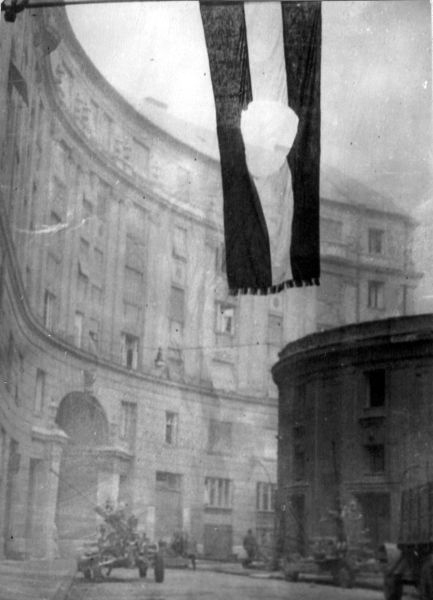
“The defeat of the Hungarian revolution was one of the darkest moments of the Cold War” – The 1956 Hungarian Revolution: A History in Documents
By 1956, Hungary had been an occupied state beginning with the Nazis. The Nazi defeat in World War II opened the door to the expansion of the Soviet Union. The Soviet Union occupied Hungary, with various degrees of misery, until the final collapse of the Communist regime in 1989. In the 1950’s, the worsening political and economic conditions in Hungary created an atmosphere of increased discontent. The harsh environment and depressed conditions can be summed up by this Hungarian miner:
“I don’t understand why we work so much in Hungary and we work for nothing and with absolutely no outlook. We have to struggle and endanger our lives in the mines for just a small amount of daily bread. A worker can’t give his family the comfort that a western worker enjoys, as they have to work much less than we do. In the United States they only have to work four hours and they earn enough to have their own property in their old age, their own car and house.” – A Home Front in the Cold War: Hungary, 1948-1989
This level of oppression and persecution led to the October 23, 1956 revolt of the Hungarian citizens against the Soviet occupation. During the first days of the revolt, Hungarians received assurances through Radio Free Europe that the United States would come to their aid. The radio broadcasts encouraged the Hungarians to increase their aggression and even gave the rebels tactical advice on defeating the Soviets.
“The hopes that were raised, then dashed, by these broadcasts cast an even darker shadow over the Hungarian tragedy that leaves many Hungarians Embittered to this day.” – A Home Front in the Cold War: Hungary, 1948-1989
Without the aid of the United States, the Hungarian uprising was brutally crushed 12 days later by thousands of Soviet tanks resulting in the loss of 2500 Hungarians and 722 Soviet troops and thousands more injured. Thousands of surviving Hungarians were arrested, imprisoned and deported to the Soviet Union where many were executed. – Soviet Invasion
Many Hungarians and many in the United States argued that the United States should have intervened militarily to aid Hungary in their resistance. The United States had a moral obligation to come to the aid of the brutalized Hungarians - Attila J. Urmenyhazi, The Hungarian Revolution-Uprising of 1956. By not doing so, the U.S. ran the risk of allowing Khrushchev to do to Hungary what the Germans did to Czechoslovakia. The United States intervention could have stopped the continued arrests and murders of Hungarian citizens. The Hungarian people were ready to be part of the new economic world, but their total devastation by the Soviet occupation delayed any economic future until the 1990’s. The United States lack of assistance deprived Hungary from attaining the rights and quality of life that the Hungarian miner had wished for. The United States argued that they risked global war between two nuclear countries, if they had intervened. Neither the Soviet Union nor the United States would have been ignorant enough to risk their existence by engaging in a nuclear war. More likely, they would have been able to free the Hungarians and keep peace with the Soviet Union.
In the summer of 2009, I had the good fortune to visit Hungary. I witnessed firsthand the continued distrust of Americans and could see the devastation of the Soviet occupation. I visited the Museum of Terror which was housed in the very buildings where the Nazis and the Soviets brutally occupied Hungary. An excellent movie showing actual footage of the Hungarian uprising is “Freedom’s Fury” ~619 words


