Friday, May 28, 2010

Nelson Mandela


He has been called a saint, a savior, an icon, and a moral giant. He has been credited with the fall of apartheid and the reunification of South Africa, but Nelson Mandela would be the first to argue that “I was not a messiah, but an ordinary man who had become a leader because of extraordinary circumstances.” The world has embraced him as a modern day “Christ figure”, but does this ordinary man deserve this God like status. BBC commentator Brian Walden argued that Nelson Mandela, “perhaps the most generally admired figure of our age, falls short of the giants of the past.” The world loves a hero, but how much of the hero is myth and how much is real. Although Nelson Mandela’s achievements are heroic in their scope, he owes his many accomplishments to the great figures of the past.

A new UCSD research study into “wisdom” most assuredly shows that Nelson Mandeal was born with the attributes of a wise person. According to the study, “wisdom is not limited to a high IQ quotient or moral righteousness, but is a form of advanced cognitive and emotional development based on experience that can be learned and increased with age. Nelson Mandela was born into the Xhosa-speaking culture whose central concept is Ubuntu or fraternity which implies compassion and open-mindedness. He was fortunate to receive both African and European schooling, but his greatest life experience and education came from his 27 years as a prisoner. It was there that Nelson Mandela really began to absorb the teachings of the great philosophers and leaders from the past. From William Shakespeare, taking lines from Julius Caesar to stir rebellion, “Cowards die many times before their deaths; The valiant never taste death but once,” to the encouraging words of the English poet, William Ernest Henley who wrote Invictus “unconquerable” – these words would forever shape Mandela’s motivation:

~

Out of the night that covers me,

Black as the Pit from pole to pole,

I thank whatever gods may be

For my unconquerable soul.

~

In the fell clutch of circumstance

I have not winced nor cried aloud.

Under the bludgeoning of chance

My head is bloody, but unbowed.

~

Beyond this place of wrath and tears

Looms but the Horror of the shade,

And yet the menace of the years

Finds, and shall find, me unafraid.

~

It matters not how strait the gate,

How charged with punishments the scroll,

I am the master of my fate:

I am the captain of my soul. (Invictus)

~

Nelson Mandela’s greatest political influence came from the great Indian philosopher, Mahatma Gandhi who personified the triumph of the human spirit over the forces of oppression. Upon Mandela’s release from prison, he gave credit to Gandhi, “We must never lose sight of the fact that the Gandhian philosophy may be a key to human survival in the twenty-first century.” Mandela also modeled himself after his fellow prisoner, Jawaharial Nehru who was the first prime minister of India to introduce sanctions against apartheid.

Along with Shakespeare, inspiring poets, and great Indian philosophers, there were countless other individuals that shaped Nelson Mandela the “ordinary man”, and fortunately for all of us, Mandela had the wisdom to incorporate all of these great figures of the past.

Friday, April 30, 2010

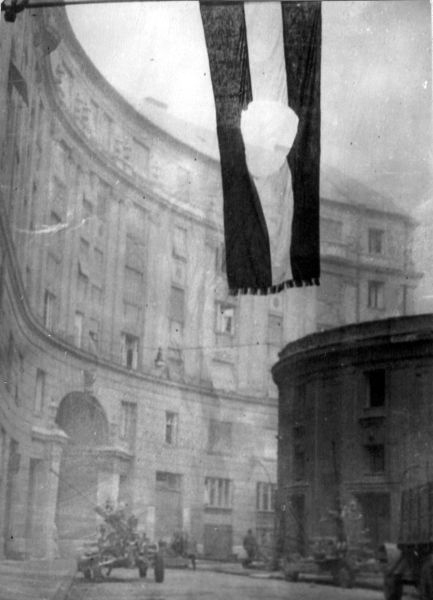
The Hungarian Revolution


“The defeat of the Hungarian revolution was one of the darkest moments of the Cold War” – The 1956 Hungarian Revolution: A History in Documents
By 1956, Hungary had been an occupied state beginning with the Nazis. The Nazi defeat in World War II opened the door to the expansion of the Soviet Union. The Soviet Union occupied Hungary, with various degrees of misery, until the final collapse of the Communist regime in 1989. In the 1950’s, the worsening political and economic conditions in Hungary created an atmosphere of increased discontent. The harsh environment and depressed conditions can be summed up by this Hungarian miner:
“I don’t understand why we work so much in Hungary and we work for nothing and with absolutely no outlook. We have to struggle and endanger our lives in the mines for just a small amount of daily bread. A worker can’t give his family the comfort that a western worker enjoys, as they have to work much less than we do. In the United States they only have to work four hours and they earn enough to have their own property in their old age, their own car and house.” – A Home Front in the Cold War: Hungary, 1948-1989
This level of oppression and persecution led to the October 23, 1956 revolt of the Hungarian citizens against the Soviet occupation. During the first days of the revolt, Hungarians received assurances through Radio Free Europe that the United States would come to their aid. The radio broadcasts encouraged the Hungarians to increase their aggression and even gave the rebels tactical advice on defeating the Soviets.
“The hopes that were raised, then dashed, by these broadcasts cast an even darker shadow over the Hungarian tragedy that leaves many Hungarians Embittered to this day.” – A Home Front in the Cold War: Hungary, 1948-1989
Without the aid of the United States, the Hungarian uprising was brutally crushed 12 days later by thousands of Soviet tanks resulting in the loss of 2500 Hungarians and 722 Soviet troops and thousands more injured. Thousands of surviving Hungarians were arrested, imprisoned and deported to the Soviet Union where many were executed. – Soviet Invasion
Many Hungarians and many in the United States argued that the United States should have intervened militarily to aid Hungary in their resistance. The United States had a moral obligation to come to the aid of the brutalized Hungarians - Attila J. Urmenyhazi, The Hungarian Revolution-Uprising of 1956. By not doing so, the U.S. ran the risk of allowing Khrushchev to do to Hungary what the Germans did to Czechoslovakia. The United States intervention could have stopped the continued arrests and murders of Hungarian citizens. The Hungarian people were ready to be part of the new economic world, but their total devastation by the Soviet occupation delayed any economic future until the 1990’s. The United States lack of assistance deprived Hungary from attaining the rights and quality of life that the Hungarian miner had wished for. The United States argued that they risked global war between two nuclear countries, if they had intervened. Neither the Soviet Union nor the United States would have been ignorant enough to risk their existence by engaging in a nuclear war. More likely, they would have been able to free the Hungarians and keep peace with the Soviet Union.
In the summer of 2009, I had the good fortune to visit Hungary. I witnessed firsthand the continued distrust of Americans and could see the devastation of the Soviet occupation. I visited the Museum of Terror which was housed in the very buildings where the Nazis and the Soviets brutally occupied Hungary. An excellent movie showing actual footage of the Hungarian uprising is “Freedom’s Fury” ~619 words

Friday, April 2, 2010

The Siege Of Leningrad

If art is the expression of the soul, then without art, we have no soul. On June 22, 1941, Adolph Hitler launched Operation Barbarossa. His intent was to gain more land for Germany, control the oil fields of Azerbaijan, eliminate Bolshevism, and to exterminate the “racially inferior” Russian people. The simple summary of Hitler’s plans was expressed this way, “The Fuehrer has decided to wipe the city of St. Petersburg from the face of the earth. We have no interest in the preservation of even a part of the population of that city.” Hitler’s army was bent on destroying St. Petersburg, the artistic soul of Russia, by using an air strike campaign, surrounding the city, and starving the people to death. This began the siege of Leningrad. On this same date, the staff of the Hermitage Museum began the exhausting task of packing up and evacuating 1.1 million pieces of art.

The Hermitage workers and their families (Hermitage-Niks) worked 23 hours straight for days. During this process, the German air raids caused severe damage of the museum. The workers had the additional task of clearing bodies and rubble from the bombed buildings. There was never enough food or rest for the workers, and many froze to death from the intense Russian winter. Hundreds kept coming to the Museum drawn by the desire to help in the effort to save the priceless works of art. The workers cut the canvases from the paintings, leaving the empty frames as a reminder that the art would return.

"We all followed a barracks-like regime. The work went on round the clock... The crates in which we put things stood on the floor and we had to work bending over all the time. Soon many of us had nosebleeds. Ready to drop, you would doze off for half an hour towards morning… Your mind immediately switched off, but half an hour or an hour later some internal impulse turned your mind back on again, you shook yourself - and back to work." Alisa Bank

By the time the workers finished loading the trains with the evacuated art, there were 12,000 people living in the Hermitage. All experienced severe depravation and many died, but their intellectual activities continued. Museum guides gave “tours” for the people and wounded soldiers. The guides had memorized the details of each of the empty canvases recreating in detail the missing painting. This gave comfort, pleasure and a respite from the insaneness of their situation.

"Professor Natalya Davydovna Flittner, a Doctor of Historical Sciences, was known to all as a major scholar of the culture of the Ancient East. During the siege, this little, rather wizened old lady gave lectures in military hospitals. One member of her audience said, "Your professor used to come to us, sit on a chair, or even a table, and began to tell us about the tombs of the ancient pharaohs so fascinatingly that we forgot about our wounds." O.E. Mikhailova

Just hearing about these great works of art had the ability of repairing the souls of the Russian survivors (600,000 people died during the siege). The art gave the Russian people pride, and from this pride, they were able to withstand the German’s bombs and starvation.

-540 words

Friday, March 5, 2010

STALINISM, THE CULT OF PERSONALITY AND SOCIALIST REALISM

Joseph Stalin was born in Georgia on December 18, 1878, though Stalin listed his birth as December 21, 1879, illustrating the many ways in which he chose to reconstruct his personal history. Stalin was born to violent parents, and in turn, he was often an abusive father. As a young man, Stalin had been snubbed by the Russian intellectual elite setting the stage for a spirit of revenge and a desire to form a personal “cult of personality”. Stalin was a ruler, a dictator and a tyrant, but under his developed “cult of personality”, there was a real person. He was cruel and vindictive, but was also a thinking, calculating, hard-working man possessed of an iron will and considerable intellect. In 1949, Stalin expelled Trotsky from the Soviet Union and attained power over 142 million people. Stalin set out to transform his country from a backward, agricultural country into a modern, industrialized, Socialist state. The result would be one of history’s greatest human tragedies.

Stalin created a new genre of art later to be known as “Socialist Realism”. Stalin spent immense sums to subsidize huge murals, gigantic frescoes, massive friezes, and colossal mosaics, each and every one of which proclaimed that life was becoming gayer and better with every year Russians lived under his leadership. All Stalinist art had to convey optimism and a type of fake realism which would persuade the masses of whatever message Stalin wanted. The images painted and recreated of Stalin, were not actually Stalin, but a new and improved ideal of what Stalin should look like. The artists themselves were willing to participate in this intellectual dishonesty hoping for improvement in their political and social standing. Though the art created was based upon a false ideal of a perfect Soviet Union, the artists’ honest efforts to portray, creatively, what was asked of them should not be overlooked. Even though this was a false reality, wasn’t surrealism, cubism and other genres meant to distort reality? Stalin’s use of art as a form of mega propaganda was extremely successful, and during the Second World War artist’s visions of Stalin transformed him from teacher and friend of the people to all-powerful defender of the Soviet Union. As John Steinbeck wrote,”Everything takes place under the fixed stare of the plaster, bronze, drawn or embroidered eye of Stalin.” Stalin’s image was everywhere, and through the work of these artists, he was elevated to the level of a God. Socialist Realism was a very successful and powerful form of art. This artistic movement represented the creative efforts of countless of Russian artists accomplishing the goal of a more positive, unified and glorified outlook for the masses. The artists’ ability to portray a more handsome and more benevolent ruler worked to calm the masses as well as keeping them in check. The decades of propaganda devoted to Stalin’s strength, wisdom, kindness and determination to destroy all enemies of the Soviet Union definitely contributed to the huge amount of grief exhibited by the Russian people upon his death.

After Stalin’s death, Khrushchev presented a report to the Twentieth Party of Congress entitled “On the Cult of Personality and its Consequences”. This report outlined the details of Stalin’s murderous activities and the evils of self promotion. Considering the huge amount of art devoted to Stalin, it is amazing to note how quickly it all vanished after this speech. Statues were taken down, thousands of pictures disappeared and even Stalin’s own body was taken out of Lenin’s tomb, cremated and the ashes scattered. There must now be millions of Russians who have never seen one of these mandatory works of art devoted to Stalin, but is this a good thing. Shouldn’t the documentation of history always be available for us to remember and learn?

629 words

The following articles and books were referenced in this blog:

http://www.amazon.com/Joseph-Stalin-Biography-Jeffrey-Zuehlke/dp/0822534215

http://www.amazon.com/Between-Heaven-Hell-Thousand-Artistic/dp/0140267735/ref=sr_1_2?ie=UTF8&s=books&qid=1267843775&sr=1-2-spell

http://www.amazon.com/Stalin-His-Life-Death-Legacy/dp/1585676446/ref=sr_1_1?ie=UTF8&s=books&qid=1267843853&sr=1-1

http://find.galegroup.com/gps/infomark.do?&contentSet=IAC-Documents&type=retrieve&tabID=T002&prodId=IPS&docId=A13421674&source=gale&srcprod=GRGM&userGroupName=mviejo_main&version=1.0